As SAP invests heavily in mobile, a security testing company will release a
tool next month to ensure mobile-accessible SAP systems are not vulnerable to
hackers.
Boston-based Onapsis will release a new module for its X1 security suite, a
product that performs automated security assessments, penetration testing and
compliance audits for SAP’s ERP (enterprise resource planning) software, said
Mariano Nunez, Onapsis’ CEO.
The module will focus in part on the SAP Mobile Platform, formerly known as
the Sybase Unwired Platform Developer Center, which helps developers build SAP
mobile applications for different devices and platforms. It also looks at the
NetWeaver Gateway, an SAP server that links devices to back-end systems, Nunez
said.
Exposing those back-end systems is complicated, and companies can face a risk
of hacking if the systems are misconfigured or do not have up-to-date patches.
“We see that companies may not be paying enough attention to that and
forgetting the devices,” Nunez said. “Our empirical experience shows those
systems are usually left insecure because of people not applying the latest
patches or not following SAP’s best security practices.”
SAP is focused on mobile access, device management and security as more
companies embrace bring-your-own-device policies. SAP supports iPhone, Android,
and Blackberry devices.
Sanjay Poonen, head of SAP’s mobile division, said at the Sapphire Now
conference in May that the company has more than 1,000 people working on
mobile-related projects in areas such as retail, banking and consumer package
goods.
Last year, SAP reported more than €222 million ($293 million) in license
revenue from its mobile-related business, a revenue stream that didn’t exist two
and half years prior, Poonen said.
“We think this market is really poised for an even bigger opportunity if you
go even beyond devices,” Poonen said. “This world is going to require us to
think of mobile security in a whole new way.”
Nunez said companies faces risks if, for example, a CRM (customer
relationship management) system is incorrectly configured for access by mobile
devices, opening a door for hackers using attack tools for Web services.
X1’s mobile security module looks at what functions and processes are exposed
in the back-end systems and not on the mobile application itself, Nunez said. It
alerts users to security vulnerabilities and tells users how to fix the issues.
The module is scheduled to be released next month, and will be free to X1
subscribers.
Onapsis is also scheduled to present two SAP security workshops at the Black
Hat security conference in Las Vegas, which kicks off on July 27. The workshops,
which are not product focused, will look at SAP security from an academic
perspective, Nunez said.
Lady Gaga is set to release her new single on Aug. 19, followed by
the much-anticipated ARTPOP album (and a corresponding app) on Nov. 11 Credit:
Inez & Vinoodh
The wait is almost over! It's been five months since Lady
Gaga canceled her Born This Way Ball tour to undergo hip surgery
-- and more than two years since she released her last studio album -- but new
music is finally on the horizon. On Friday, July 11, Mother Monster announced
via a press release that the Haus of Gaga was once again open for business and
would be releasing her new single on Aug. 19, followed by the ARTPOP album
and app on Nov. 11.
PHOTOS: Lady Gaga's wacky wardrobe
"The album ARTPOP musically mirrors Gaga's creative process as she
passes through the mediums of each artist she collaborates with, scoring a
blueprint of her journey," the release states. "The result, a 'rage' of
electronic passion and fury, defining each artistic process from beginning to
end, ARTPOP could mean anything. But for her, this is a celebration of
obsession."
PHOTOS: Gaga's body evolution
The corresponding app, meanwhile, is described as "a musical and visual
engineering system that combines music, art, fashion, and technology with a new
interactive worldwide community -- 'the auras.'" Through it, users will be able
to "build and share their own projects, chat with one another, and watch in
real-time on a virtual globe as ARTPOP explodes onto the physical and
virtual universe at once on November 11, our 'BIG BANG!'"
PHOTOS: Gaga's craziest hairstyles
The aim, the release states, is "to bring the music industry into a new age;
an age where art drives pop, and the artist once again is in control of the
'icon.'"
The "Just Dance" singer, 27, has been hard at work on her upcoming album for
months now. "Gaga has been writing some of the songs as they go," a source told
Us Weekly recently. "She's been trying to make the music
something fresh and beautiful."
But Mr. Heins, speaking at the company’s annual meeting, told investors
BlackBerry just needed more time for a turnaround — and he again sought their
patience.
Not everyone was biting. One shareholder, referring to one of the new
phones, the BlackBerry Z10, told Mr. Heins: “My sense is that the rollout of the
Z10 was a disaster.”
“Were we perfect at the launch?” Mr. Heins responded. “Probably not. Was
it a disaster? I don’t think so.”
After more than two years of development, the new phones and their new
operating system were supposed to give BlackBerry smartphones capabilities
similar to those of phones made by Apple and Samsung, the dominant forces in the
market. But hopes have vanished that the new phones would swiftly increase
market share in the United States — now just 0.9 percent, according to a survey
from Kantar Worldpanel ComTech.
Late last month, BlackBerry said that it had shipped just 2.7 million of
the new models, about a million fewer than analysts expected. That disappointing
news set BlackBerry’s stock sharply downward and eliminated the possibility that
the annual meeting would be a turnaround celebration.
When Mr. Heins introduced the company’s new phones in New York this year,
he spoke to an excited crowd, a situation that was repeated at a meeting this
spring with enthusiastic developers. But on Tuesday, when he faced a crowd of
shareholders and questions about the weak sales of those phones, the reception
was far more muted.
And maybe that is the best he could have hoped for. A few weeks ago, when
the shipment numbers were released, the company also reported an $84 million
loss in the latest quarter. BlackBerry shares still have not recovered — and a
chorus of harsh questions about the direction of the business have not gone
away.
Mr. Heins again warned investors to expect more losses during the current
quarter, while the company increases its spending on marketing and other
promotions for the new BlackBerry 10 line of phones. And although the company
has spent the last two years saying the phones were the centerpiece to its
future, Mr. Heins repeatedly said on Tuesday that “we are not a devices-only
company,” and he outlined his hopes for growth in its data services business.
He attributed the disappointing reception for BlackBerry 10 to the United
States market.
“It is really a challenge in the U.S.,” Mr. Heins said at the meeting,
which was webcast from the University of Waterloo in Ontario. When another
shareholder asked him why the company had been unable to win over American
investors, particularly ones based in New York, he said: “I would absolutely
admit that this is an uphill battle.”
Richard Piasentin, the managing director of sales and marketing for the
United States, left BlackBerry last month, Adam Emery, a spokesman for the
company, said on Tuesday.
Some of problems with the BlackBerry 10 release seemed more related to
the products than to advertising or lack of prominence in carriers’ stores,
which had been cited as problems.
Some buyers of the Q10, a model that includes BlackBerry’s signature
keyboard, have said they were disappointed to discover that it initially could
not synchronize calendar and contact information with corporate systems that use
Microsoft Outlook. Others discovered mail syncing issues that they had not had
with previous BlackBerrys. And although BlackBerry continues to expand the apps
offered for the phone, many important ones are missing, and assessments of their
overall quality are mixed.
Among the disappointed was Mark R. McQueen, the president and chief
executive of Wellington Financial in Toronto. While Mr. McQueen is a BlackBerry
loyalist, his frustration with the Q10 became so great that he wrote two
detailed posts enumerating its problems on his blog, which is widely followed in
Canada’s financial community. He wrote that the phone’s shortcomings had
prompted him to sell his BlackBerry shares at a loss.
“The sad reality is that BlackBerry management has failed to deliver on
the incredibly modest expectations of someone who has held shares in the
company, on and off, since the late 1990s,” Mr. McQueen wrote.
Many technology reviewers praised several features of the new phones.
Mike Gikas, the senior editor for electronics at Consumer Reports, said the new
phones were “pretty good but they don’t have the pizazz of top-shelf performers.
No one’s dying for these phones.”
He said that whenever he was asked for his thoughts about the new
BlackBerrys, “the next question is: ‘Do you think they’re going to be around?’
And that’s a consideration for people on a two-year contract.”
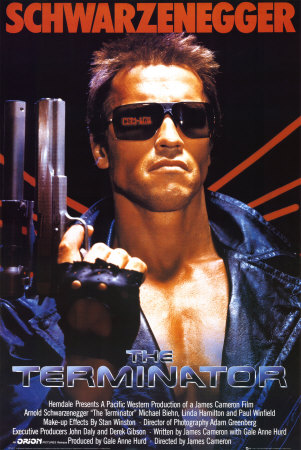
A new Terminator movie will hit theaters on June 26, 2015, Paramount announced Thursday, June 27.
Paramount, David Ellison's Skydance Pictures and Megan Ellison's Annapurna Pictures are partnering on the reboot of the franchise. The movie is intended as the first in a trilogy.
PHOTOS: 30 Groundbreaking Sci-Fi Films
The Terminator, starring Arnold Schwarzenegger and directed by James Cameron, was released in 1984 and has spawned three sequels. The last of the movies, Terminator Salvation, was released in 2009 by Warner Bros. and grossed $371 million worldwide.
It's not clear what role, if any, Schwarzenegger would have in the reboot. He starred in the first three films and appeared briefly in Salvation, but he has not signed on to the untitled new film.
Microsoft formally unveiled Windows 8.1 to developers on Wednesday, with executives promising a “rapid release” schedule to keep the pace of new innovations coming.
For those who have read PCWorld’s hands-on of the Windows 8.1 preview, Microsoft’s announcements were nothing new. Executives confirmed the reworking of the Start menu, new boot-to-Desktop options, as well as a slew of updated apps that take advantage of Windows 8.1, which can be downloaded in preview form from preview.windows.com.
For Microsoft, the Build 2013 developer conference represents a chance to connect or reconnect with developers, luring them back to the Windows platform. Although Microsoft is nearing 100,000 Windows 8 apps, that still falls well short of the millions of apps that have been written for the Apple iOS and Google Android platforms.
For Steve Ballmer, the chief executive of Microsoft, the company is undergoing a transformation to a business that develops devices and services, and not just software. “And the only way that can happen is by a company undergoing a rapid-release schedule,” he said.
Although Ballmer and other Microsoft executives focused on Windows 8, they took a few moments to make a few announcements regarding Windows Phone, which provides an interface consistent with that of the other Windows platforms. “It’s beautiful, and it looks like the same software that we have on Windows tablets, Windows PCs, and our Xbox systems,” Ballmer said.
New Windows Phones will appear on Sprint. The big news for Windows Phone is that Sprint will add the HTC 8XT as well as the Samsung ATIV S Neo, meaning that Windows Phones will appear on all U.S. wireless carriers.
But whether it’s a phone or a tablet, smaller screens will become increasingly important, Ballmer said.
”The PC of today doesn’t look a lot like the PC of ...five or seven years ago,” Ballmer said, referring to an “explosion of new devices,” including small-form-factor tablets. Acer’s eight-inch ATIV tablet is “flying off the shelves,” Ballmer said, enabling kids to do homework and do a little bit of entertainment, too.
”This small form factor is very important,” Ballmer said. “I wouldn’t call them PCs, but this small form factor is very important.”
Ballmer also promised that hardware makers would deliver Windows 8 devices with touchscreens, a capability that was neglected within early Windows 8 offerings. Consumers will see an “outpouring” of new devices that are notebook computers in every respect, and touch-enabled, Ballmer promised, Customers that have touch systems are much happier than non-touch-enabled customers, or Windows 7 customers, he said.
Ballmer showed off the Helix notebook from Lenovo, a Core i7 device with a full day’s worth of battery enabled with a keyboard dock.. “It literally makes it the most powerful PC, and the most powerful lightweight tablet... should we call it a PC? Should we call it a tablet? I’d call it all Windows, all the time,” Ballmer said.
Finally, Ballmer moved to the meat of the presentation, the changes that it had made to make Windows 8.1 a bit more consumer friendly—or in Ballmer’s words, to “refine the blend” between the Start page and the Desktop, among other changes.
Ballmer said that the way in which the Desktop and the Start page will be integrated will represent a better blend of both, with boot to Desktop, common backgrounds between the Desktop and the Start page, and other features bringing both together.
Combining the Desktop and Start pages "refines the blend," according to Steve Ballmer. Julie Larson-Green, who runs the Windows division at Microsoft, said she was proud of how responsive Microsoft’s engineering team had become. The company had over 800 updates to the products since Microsoft launched Windows 8 last October, and Windows 8.1 is the biggest.
In portrait mode, the new Start screen works well on the new small-form-factor devices, Larson-Green said. The Twitter app has been designed for the new, smaller form factor. With Windows 8.1, she said that Microsoft had added gestures to the on-screen keyboard, where users can slide their fingers across, tap, and then the word appears. Users can also press and hold to access.
Microsoft's message at Build 2013 is that apps rule—both its own, and the ones created by third-party developers.
Larson-Green showed off the new Mail app, due in the fall. Users will be able to banish or Sweep emails from a certain sender, and then segregate automated emails, such as those from Facebook and Twitter, or subscribed newsletters, into their own folder.
Free music streaming from from Xbox Music will comes with Windows 8, Larson-Green said, together with the ability to create a playlist from music it finds on the Web, she said.
Larson-Green also showed off personalization features, such as the ability to show photos via the lock screen, the ability to take a Skype call from the lock screen, and Windows 8.1’s ability to add personalized backgrounds. She also briefly explained integrated photo editing, plus new apps including Food & Drink, which can be manipulated via hands-free mode. Basically, all the apps “in Windows 8.1 have either been written for Windows 8.1 or updated for it," she said. Those apps can be snapped together, with four per widescreen monitor.
South by Southwest 2013 Grand Jury and audience winner Short Term 12 will be the first movie released under a new co-acquisition and distribution partnership between Demarest Films and Cinedigm, it was announced Tuesday.
Short Term 12, a drama about a twentysomething woman (Brie Larson) working in a foster home, will be theatrically released by Cinedigm on Aug. 23 and will be released in ancillary markets in early 2014. The film also stars Kaitlyn Dever, John Gallagher Jr., Rami Malek and newcomer Keith Stanfield.
The companies envision doing expanded independent film acquisitions, marketing and distribution in the future.
“This arrangement is truly unique as it’s not a traditional distribution or production relationship – it’s a fully fledged partnership that allows us to share equally in the upsides of our indie films, from theatrical all the way throught the vast ancillary opportunities our distribution expertise and infrastructure provides,” says Cinedigm CEO Chris McGurk. “It’s great to be working with such an innovative team, and this arrangement should expand acquisition opportunities for both parties in the future.”
“Cinedigm is on the cutting edge of the independent film renaissance, and we are thrilled to be partnering with them and tapping into the vast potential that digital distribution provides,” said Sam Englebardt, co-founder and CEO of Demarest Films, adding: “We expect this to be the first of many films that we co-release with Cinedigm and a model that we are excited to replicate with other distribution partners as well.”